Key Facts from the Benchmark
- SSB: Apache Doris shows up to 34x speedup vs ClickHouse ReplacingMergeTree in update-heavy workloads.
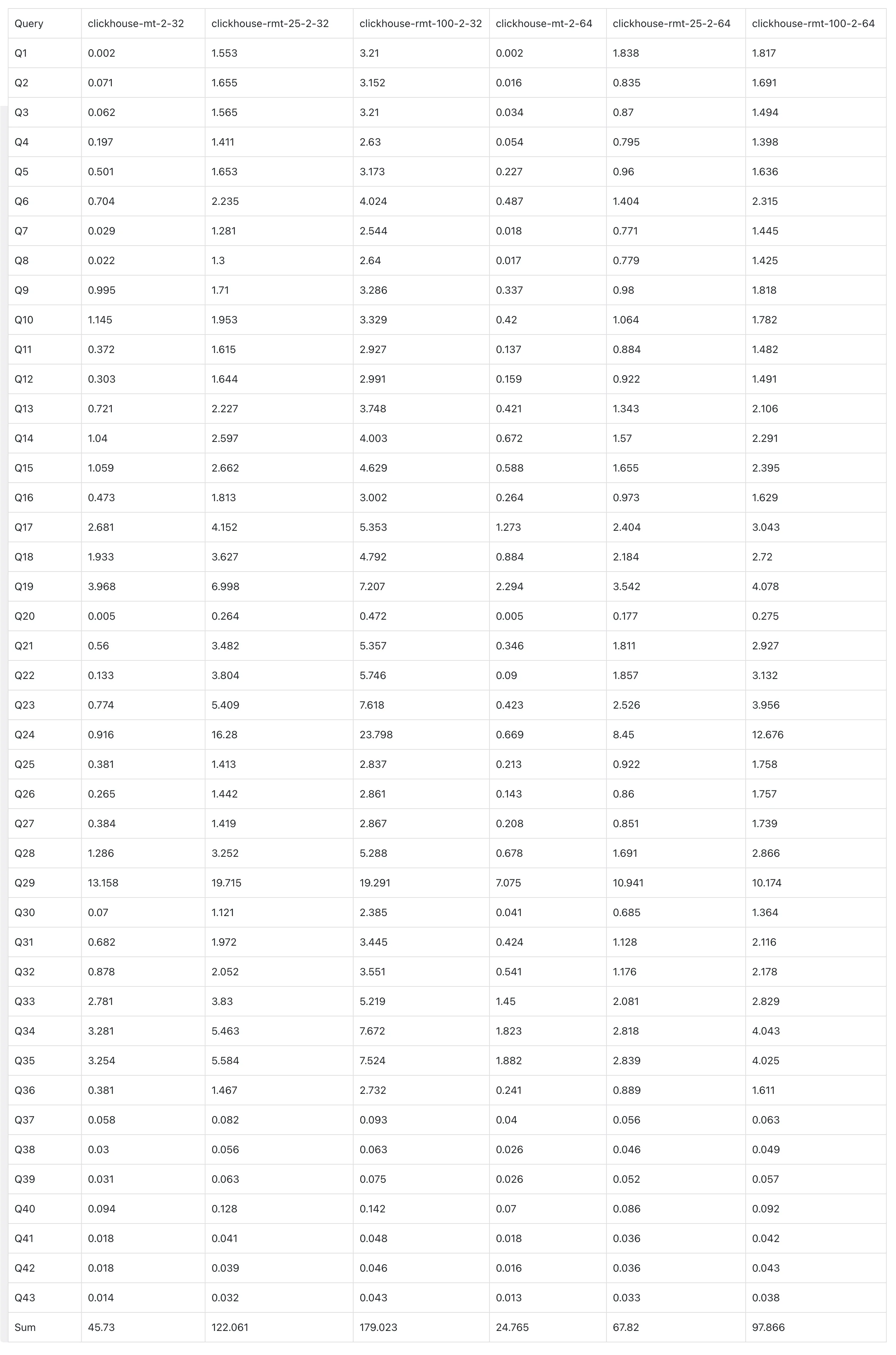
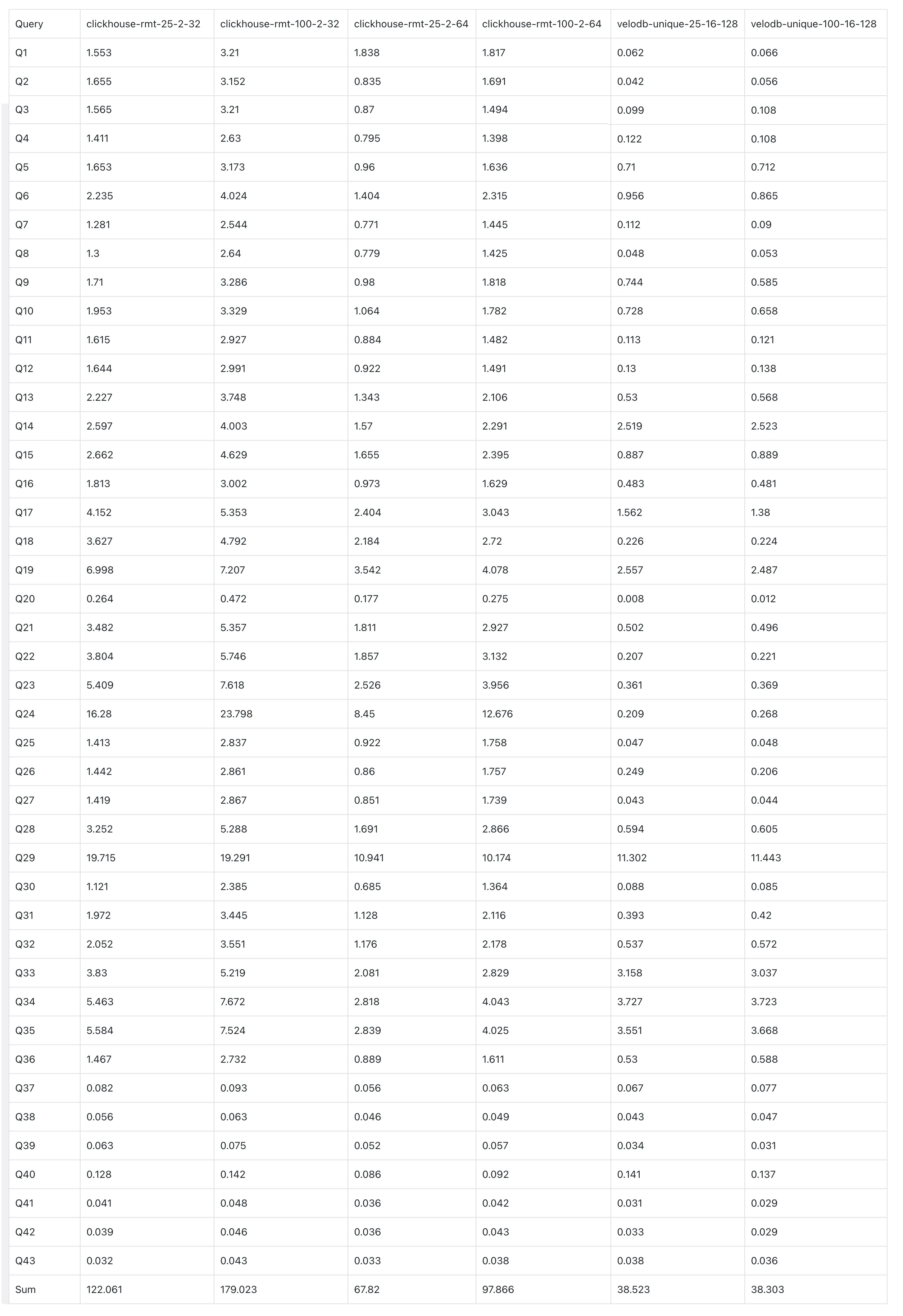
- ClickBench: Apache Doris is 1.7x-4.6x faster depending on update ratio and resource profile.
- Within ClickHouse, MergeTree consistently outperforms ReplacingMergeTree, exposing the cost of update semantics.
- Business impact: more predictable latency under continuous updates for BI, fraud, and risk workloads.
1. What was tested and why
The VeloDB team benchmarked Apache Doris against ClickHouse in update-heavy analytics scenarios: new events, corrected transactions, customer profile changes, and operational data refreshes.
The objective was straightforward: identify which engine better sustains low query latency while continuously ingesting updates.
2. Test environment
- VeloDB Cloud (Apache Doris): 1 node, 16 vCPU, 128 GB RAM
- ClickHouse Cloud: 2 nodes × (16 vCPU, 64 GB RAM each)
- ClickHouse Cloud: 2 nodes × (8 vCPU, 32 GB RAM each)
- Benchmarks: SSB and ClickBench; update ratios: 25% and 100%
The benchmark included both CPU-aligned and memory-aligned comparisons to reduce configuration bias.
3. Update mechanism: Doris vs ClickHouse
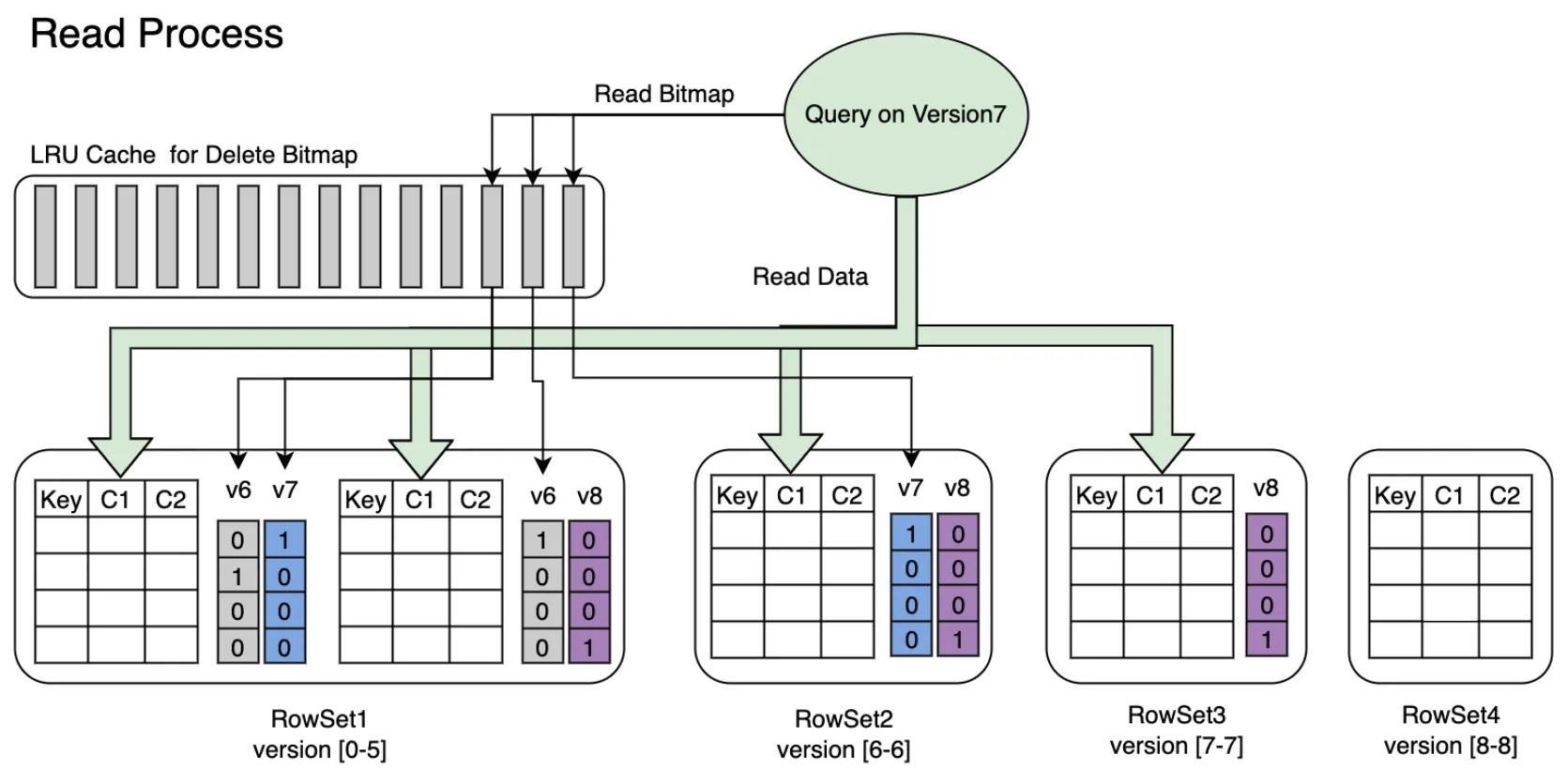
Apache Doris uses Unique Key + Delete Bitmap. Older record versions are marked at write time, so query-time deduplication overhead is minimized.
ClickHouse relies on ReplacingMergeTree for update-like behavior. New versions are appended, while consolidation depends on background merges and often requires FINAL semantics.
In practice, this means update-heavy workloads increase read cost in ClickHouse faster than in Doris.
4. SSB results (real-time updates)
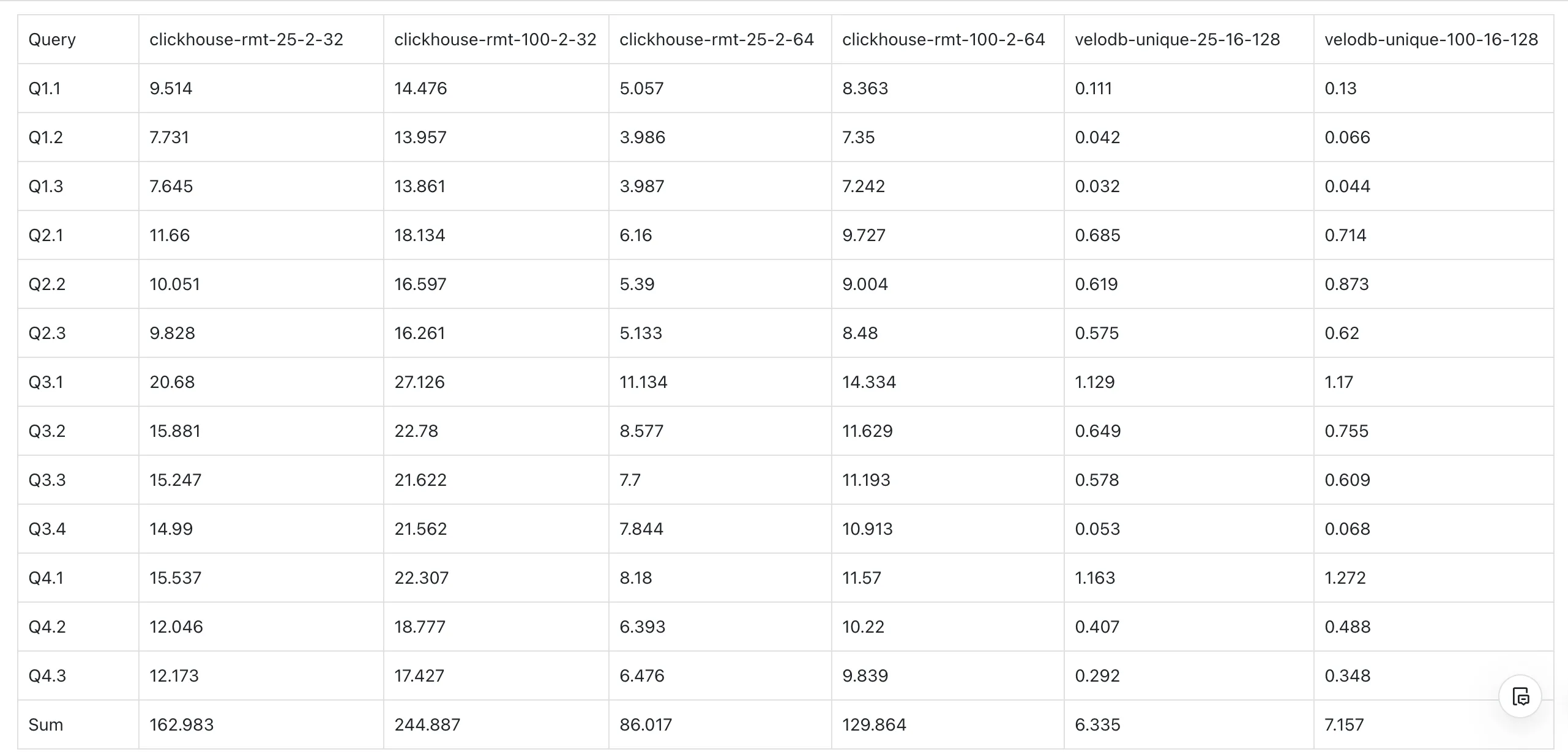
- Doris vs ClickHouse ReplacingMergeTree (32c/128GB): 18x faster at 100% updates, 14x faster at 25% updates.
- Doris vs ClickHouse ReplacingMergeTree (16c/64GB): 34x faster at 100% updates, 25x faster at 25% updates.
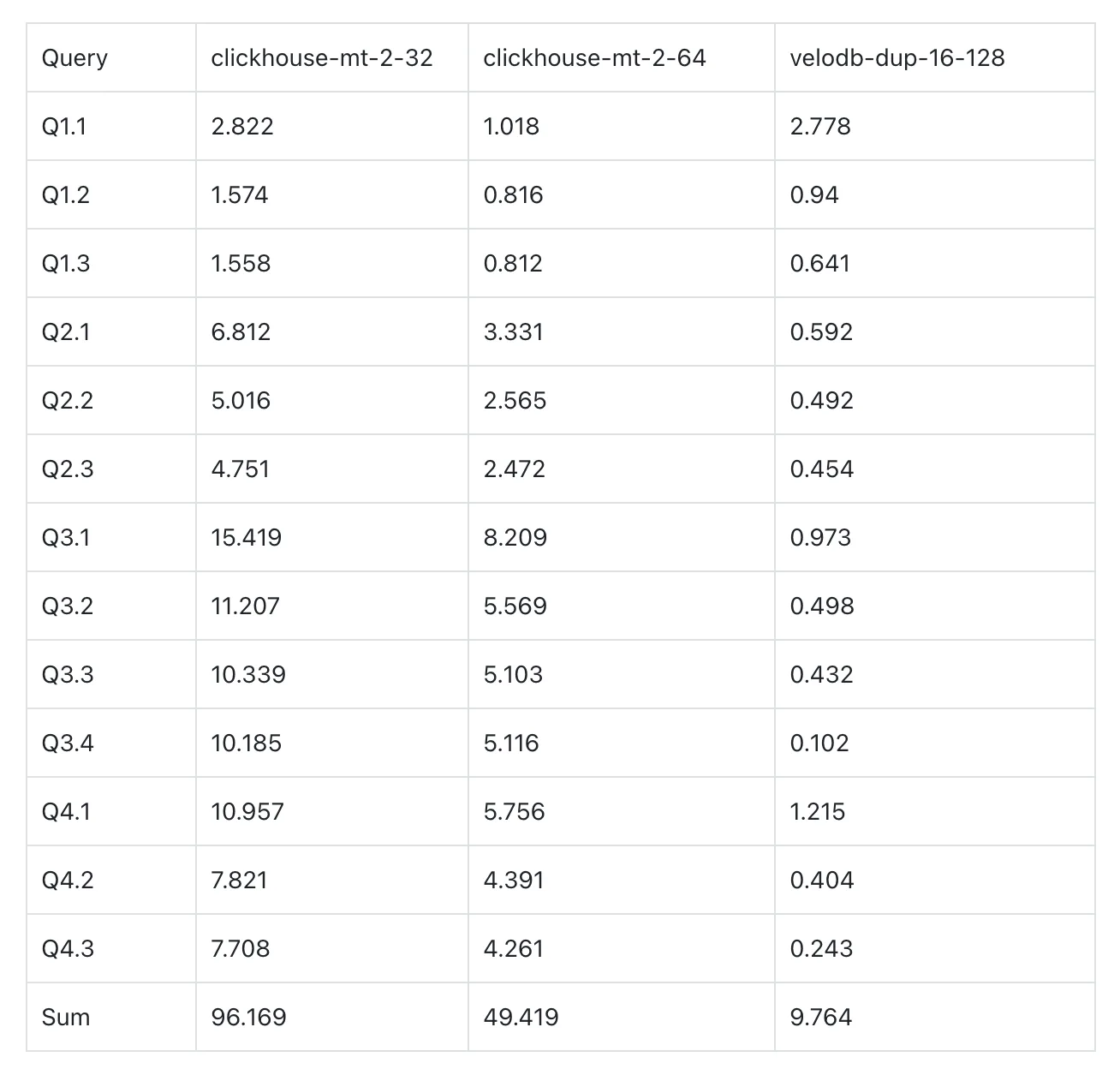
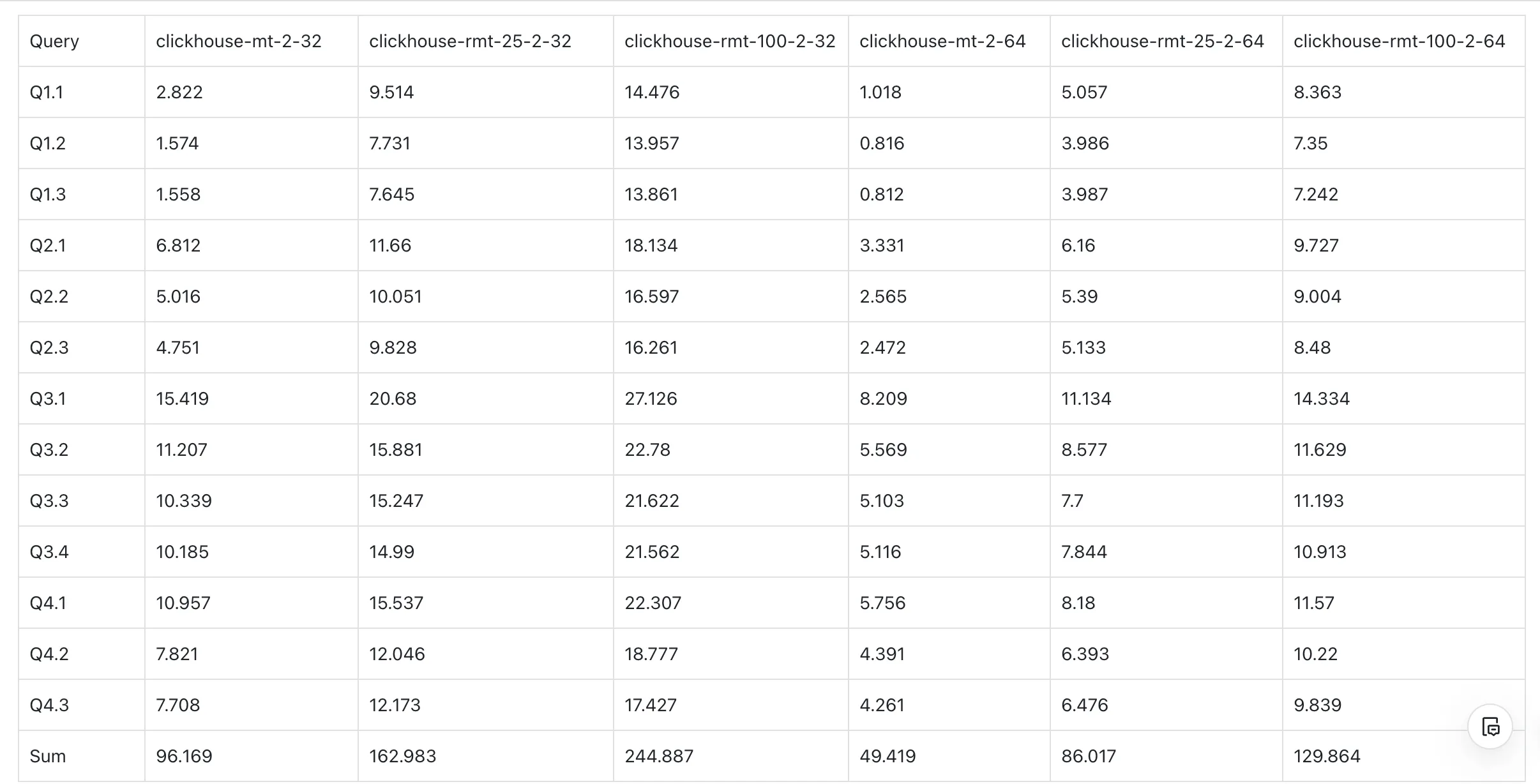
- Within ClickHouse itself, MergeTree outperforms ReplacingMergeTree by 1.7-2.5x.
5. ClickBench results (real-time updates)
- Doris vs ClickHouse ReplacingMergeTree (32c/128GB): 2.5x faster at 100% updates, 1.7x faster at 25% updates.
- Doris vs ClickHouse ReplacingMergeTree (16c/64GB): 4.6x faster at 100% updates, 3.1x faster at 25% updates.
- Within ClickHouse, MergeTree is 2.7-3.9x faster than ReplacingMergeTree.
6. Why this matters for modern OLAP
- Real-time analytics requires both low-latency ingestion and low-latency ad-hoc queries.
- If updates degrade query latency, dashboards and alerting drift behind reality.
- This directly impacts fraud detection, risk systems, and SLA-sensitive operations.
- That is why update handling is a first-class OLAP selection criterion.
8. Benchmark Limits and Fairness Conditions
To interpret the benchmark responsibly, keep these boundary conditions in mind:
- The test was executed on specific managed cloud configurations (VeloDB Cloud and ClickHouse Cloud).
- The scenario focuses on update-intensive workloads; pure append/scan workloads may produce different outcomes.
- Results are sensitive to table model, merge/background compaction settings, and query profile.
- SSB and ClickBench are representative, but final architecture decisions should rely on your own workload POC.
Recommendation: run a short workload-driven POC with your SLA, schema design, and real query patterns before migration.
7. Apache Doris customer stories
NetEase Cloud Music
Migrated from ClickHouse to Doris for log analytics at trillion-event scale, with peak 6 GB/s ingest and improved query concurrency.
Lakala
Consolidated Elasticsearch/Hive/HBase/TiDB/Oracle into Doris with up to 15x faster queries and 52% fewer servers.
Kwai
Built a unified lakehouse on Doris, handling nearly one billion queries per day with high concurrency and lower complexity.
Original source
VeloDB Engineering Team, "Apache Doris Up to 34x Faster Than ClickHouse in Real-Time Updates", 2025-10-01.
https://www.velodb.io/blog/apache-doris-34x-faster-clickhouse-realtime-updates